
How a beginner builds a winning team
Fantoss how-to-play is written as a single sitting — open it once and your first lineup is done before the toss. The seven moves below are the same ones a working captain uses. Each step links to a deeper guide so you can read as much or as little as you want before joining your first contest.

Step 1 — Pick a match you actually know
Open the lobby and start with a fixture you have watched twice this season. Familiarity beats selection skill in the first ten contests. Pick a match where you know the form of at least four players.
Fantoss surfaces the desk's match brief at the top of every fixture — read it first. The brief lists the pitch read, the toss impact and the desk's recommended captain pick.
The seven steps above are the same ones a working captain uses in paid contests. Reading the brief, staying inside the salary cap and choosing captain with intent — these three moves alone account for 70% of the variance between an average lineup and a winning one. The other four moves polish the edges.
Fantoss publishes a free practice contest for every new account. Use it to learn the scoring system before your first paid entry. The free contest uses the same scoring engine as the paid lobby — what you learn in the free contest applies directly to paid contests.
After your first ten paid contests, review the team selection that worked and the one that did not. The desk's brief is the most reliable predictor of captain performance; your own read of the pitch is the second. Stack the two and your contest rank will rise.

Step 2 — Read the pitch brief
Surface, weather, dew and toss — these decide captain choice more than form. A green seamer with overcast skies favours the bowlers; a flat deck with dew favours the batters chasing.
The Fantoss brief lists the surface type, the weather forecast, the dew likelihood and the toss impact. Read all four before picking your captain.
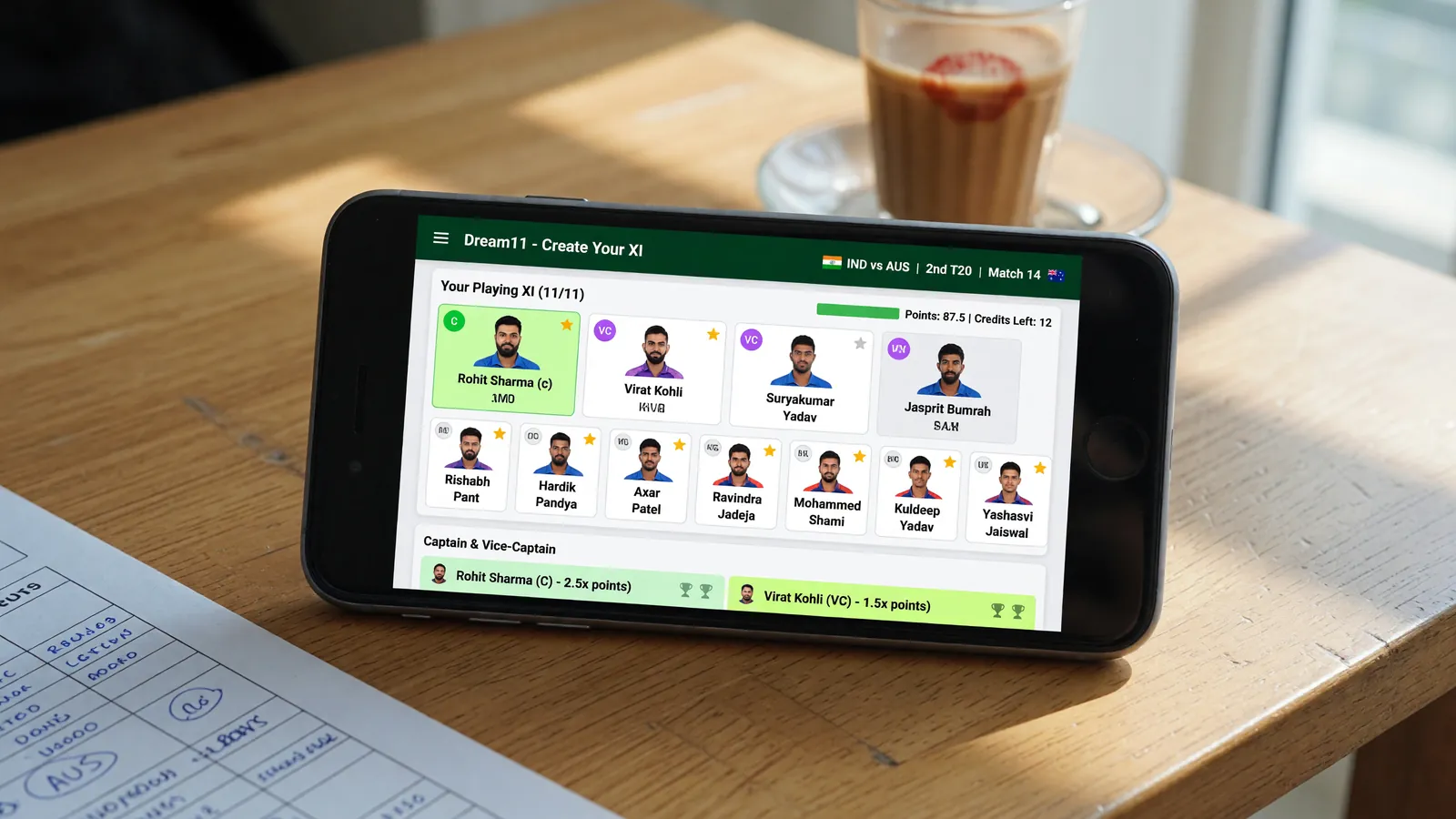
Step 3 — Pick seven players from the playing XI
Fantoss lineups require seven players from the playing XI. The captaincy multiplies the score of two of them; the other five carry the salary cap. Pick seven, not eleven, because the bench does not score.
Use the filter buttons to view players by role — wicket-keeper, batter, all-rounder, bowler. The salary cap mirrors real-world auction economics: pick two stars, three value picks and two differential choices.
Step 4 — Stay inside the salary cap
The cap is dynamic and reflects the current playing-XI odds. A captain pick in the live lobby reflects the desk's most recent read, not the morning's table. As a player drops in odds, their salary cap value rises.
If you cannot fit your favourite player inside the cap, drop a star and pick two value picks who can outscore their salary. Differential captaincy has to be backed by match-up data.
Step 5 — Choose captain (2x) and vice-captain (1.5x)
The captain call is the highest-leverage decision in the lineup. Default to a player whose role guarantees touches — an opener, a death-over bowler or a designated finisher. Avoid captaincy on all-rounders who may sit out a phase.
Use ownership as a check, not a directive. If the obvious captain is in 60% of lineups, you need a reason to pick them, not a reason to avoid them. Differential captaincy is high-risk when the match-up data does not support it.
Step 6 — Pick a contest that fits your bankroll
Beginners should sit at ₹1–₹10 contests until the scoring system stops surprising them. Read the contest rules tab — entry fee, prize pool, winner split, max entries per user.
Fantoss also includes private-room contests. Invite a friend, set the entry fee and prize split, and run a contest for two or twenty players. Private rooms are free of platform fees.
Step 7 — Watch the match on the Fantoss scorecard
Live points update after every over. Watch the captain's multiplier work and note the picks that underperformed — that is the only fantasy education worth having. The scorecard shows every player's running total plus a small badge that highlights the captain's contribution.
After the match, review your lineup against the published probable XI. If your captain was dropped at the toss, the lineup auto-replaces with the next XI player — but you do not get the captain multiplier. This is why reading the brief matters.
Frequently asked questions
How long does it take to build a lineup?
First-time users build their first lineup in 8–12 minutes. Experienced users build in under 3 minutes.
Can I edit my lineup after the contest starts?
No. Lineups are locked at the deadline. The deadline is usually 5 minutes before the toss.
What happens if my captain is dropped at the toss?
The lineup auto-replaces the captain with the next XI player but the captain multiplier is not transferred. This is why reading the brief matters — the brief flags likely XI changes.
How is the salary cap calculated?
The salary cap is dynamic and reflects the current playing-XI odds. A player in form gets a higher cap value; an out-of-form player gets a lower value.
Can I enter multiple contests with the same lineup?
Yes. The same lineup can be entered into multiple contests, including contests with different prize pools.
What is the difference between a free contest and a paid contest?
Free contests do not require an entry fee and pay out bonus credits. Paid contests require an entry fee and pay out cash via UPI or bank transfer.