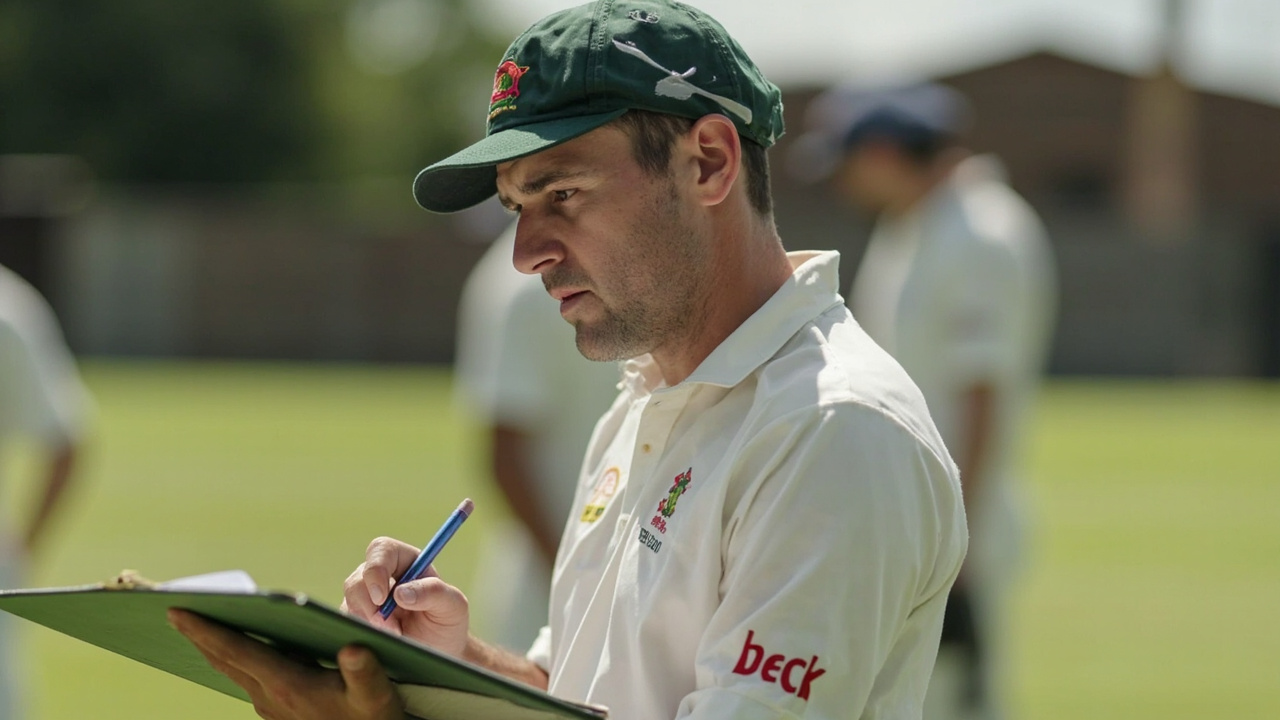
Why the captain pick decides the contest
The captain's points are multiplied by 2x and the vice-captain's by 1.5x. A wrong captain call typically swings your contest rank by 50–80 positions in a grand league. This page lists the twelve rules the Fantoss editorial desk uses when picking captain, with worked examples from the last IPL season.
At a glance

The twelve rules
Pick a player whose role guarantees touches
Openers face a guaranteed number of balls; death-over bowlers bowl a guaranteed quota. Avoid captaincy on all-rounders who may sit out a phase.
Use ownership as a check, not a directive
If the obvious captain is in 60% of lineups, you need a reason to pick them, not a reason to avoid them. Differential captaincy needs match-up data.
Anchor the captain pick on role, not form
A player in form who does not bat in the top six is a worse captain pick than an out-of-form opener. Role is the most important variable.
Avoid captaincy on impact players
The impact-player rule (IPL only) allows a substitution. If your captain is the likely impact-player substitute, the captain multiplier may not apply. Avoid this risk.
Differential captaincy needs match-up data
A differential captain pick (under 20% ownership) is high-risk unless the match-up data supports it. The desk cites the relevant data in the brief.
Vice-captain is not the second-best pick
Vice-captain is a 1.5x multiplier. Choose a player whose role guarantees touches in a different phase — e.g. captain the opener, vice-captain the death-over bowler.
Read the brief before locking
The brief lists the likely XI, the toss impact and the desk's captain pick. Skipping the brief forfeits the highest-leverage information in any contest.
Stack the captain pick on a high-ownership player
Differential captaincy is high-risk. Default to a high-ownership player unless the match-up data is overwhelming.
Captain the opener on a flat deck
A flat deck favours the batters. Captain the opener — they get the best pitch conditions and a guaranteed number of balls.
Captain the spinner on a turning track
A turning track favours the spinners. Captain the spinner — they take wickets and the batters struggle to rotate strike.
Captain the seamer on a green seamer
A green seamer favours the seamers. Captain the seamer — they take wickets in the powerplay and the batters struggle with the new ball.
Review the captain pick after the match
Track the captain pick that worked and the one that did not. The spreadsheet is the only fantasy education that compounds.
When to follow the herd
Ownership data, match-up data, captain value
Follow the herd when the match-up data supports the obvious captain pick. A high-ownership captain in 60% of lineups is the right call when the role, form and venue split all point to that player.
Differ from the herd when the match-up data contradicts the obvious pick. A differential captain pick (under 20% ownership) is the right call when the role, form and venue split point to a different player.
Use ownership as a check, not a directive. The desk cites ownership data in the brief — read it alongside the match-up data before locking the captain pick.
The Fantoss editorial desk applies these twelve rules in every match brief. We do not publish tips that we ourselves do not follow. The rules are updated annually — the 2024 version is published in the archive; the 2025 version is the current one.
Use ownership as a check, not a directive. The desk cites ownership data in the brief — read it alongside the match-up data before locking the captain pick.
Differential captaincy is high-risk unless the match-up data is overwhelming. The desk cites the match-up data in the brief — read it before locking the captain pick.
Track the captain pick that worked and the one that did not. The spreadsheet is the only fantasy education that compounds.
Read the brief before locking the captain pick. The brief lists the likely XI, the toss impact and the desk's captain pick. Skipping the brief forfeits the highest-leverage information in any contest.
Stack the captain pick on a high-ownership player unless the match-up data is overwhelming. Differential captaincy is high-risk.
A 60% ownership captain needs a reason to pick, not a reason to avoid. The desk cites the match-up data in the brief — read it before locking the captain pick.
Follow the herd when the match-up data supports the obvious captain pick. Differ from the herd when the match-up data contradicts the obvious pick.
Frequently asked questions about captain picks
What is the impact-player rule? Each team can substitute one player from a list of four substitutes at any point during the match. The desk flags likely impact-player swaps in the brief.
What if my captain is ruled out at the toss? The lineup auto-replaces the player with the next XI player but the captain multiplier is not transferred. This is why reading the brief matters.
Frequently asked questions
What is the captain multiplier?
Captain's points are multiplied by 2x; vice-captain's by 1.5x. The captain call is the highest-leverage decision in any lineup.
How does ownership affect the captain pick?
Use ownership as a check, not a directive. A 60% ownership captain needs a reason to pick, not a reason to avoid. Differential captaincy needs match-up data.
What is the impact-player rule?
Each team can substitute one player from a list of four substitutes at any point during the match. The desk flags likely impact-player swaps in the brief.
How do I read the brief?
The brief lists the likely XI, the toss impact, the weather, the head-to-head form and the probable XI. Read all four before picking the captain.
When should I differ from the herd?
When the match-up data contradicts the obvious pick. A differential captain pick (under 20% ownership) is the right call when role, form and venue split point to a different player.
What if my captain is ruled out at the toss?
The lineup auto-replaces the player with the next XI player but the captain multiplier is not transferred. This is why reading the brief matters.
What is the captain multiplier? Captain's points are multiplied by 2x; vice-captain's by 1.5x. The captain call is the highest-leverage decision in any lineup.
Yes — see the FAQ list above for the full answer.
How does ownership affect the captain pick? Use ownership as a check, not a directive. A 60% ownership captain needs a reason to pick, not a reason to avoid. Differential captaincy needs match-up data.
Yes — see the FAQ list above for the full answer.